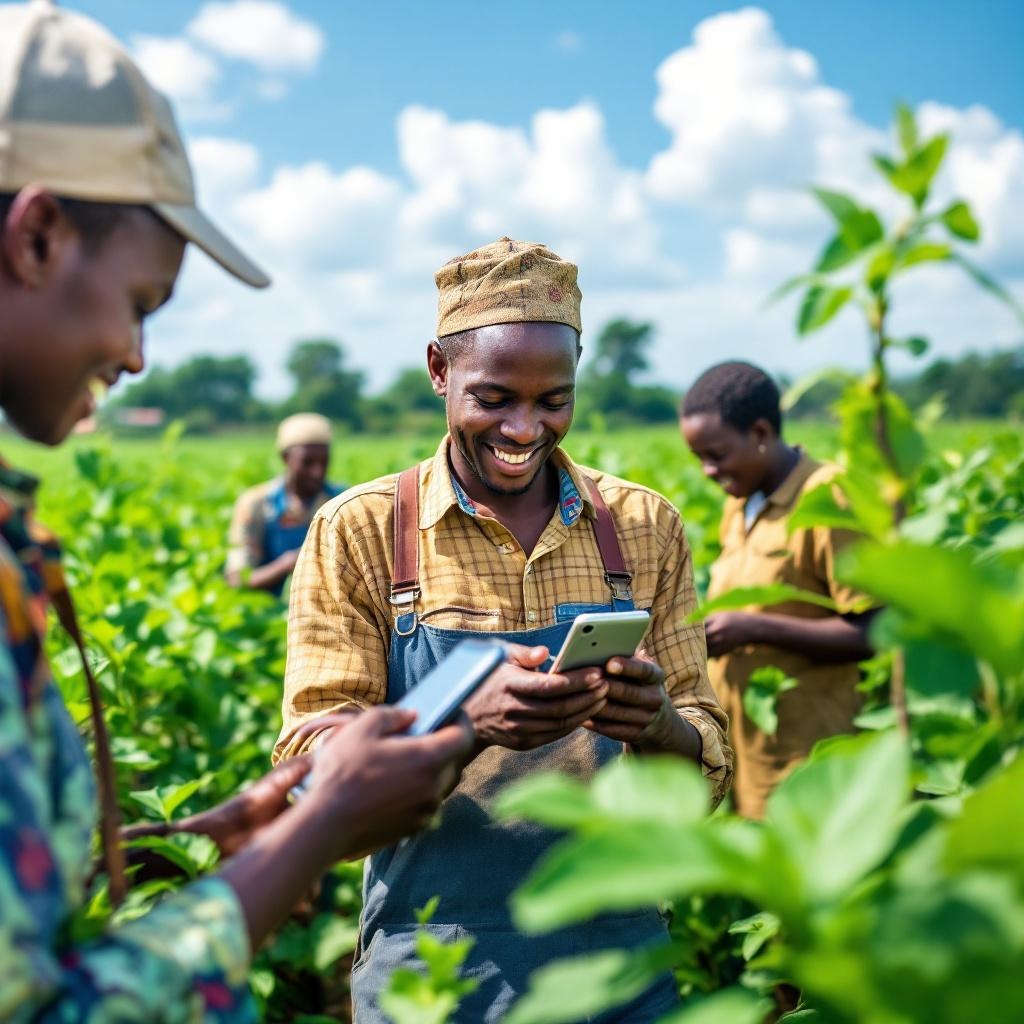



While Worldreader has reached more than 22 million people in 100 countries in its mission to get families reading, Kenya holds a special place in our organization. As a global tech nonprofit dedicated to promoting early childhood literacy, Worldreader began some of its earliest global outreach efforts in 2010 here, giving out thousands of e-readers to students.
Today, we reach tens of thousands of families in Kenya through our BookSmart app. A recent YouTube video about our Get Kenya Reading initiative, a five-year, multi-partner effort launched last year with publishers, government leaders, literacy advocates and partners such as Safaricom, garnered more than one million viewers. In Kenya, we are proud we have helped build a movement focused around a shared goal of strengthening family reading at national scale.
As an executive with more than 26 years of experience at the intersection of global development, public-sector partnerships, and education policy, I know that is no easy feat. I have learned that the most durable solutions rarely come from outside expertise alone. They emerge when local leadership, national systems, and trusted partners align around a shared goal. This is why I value the opportunity to deepen connections across Kenya alongside my fellow Worldreader board and leadership colleagues during our visit this week.
Literacy as a development and policy issue
Leaders in Kenya are confronting a challenge shared by education systems worldwide: too many children enter school without the foundational literacy and social-emotional skills they need to succeed. Driven by limited access to books, low reading frequency, and resource constraints, this early gap reinforces inequality and learning poverty long before a child ever enters a classroom.
There is, however, reason for optimism. In Kenya, Worldreader is working alongside government, private-sector, and community partners to demonstrate a different path. Our experience in Kenya – and across the globe – demonstrates that early literacy cannot be addressed through education policy alone. It is a development issue and a systems challenge that depends on how early and how deliberately governments and institutions invest in families. That investment, in turn, is a foundational driver of economic and social outcomes.
Why education systems must prioritize early reading
We know that nearly 90 percent of a child’s brain development occurs by age five, making the early years decisive for later learning and life trajectories. Regular family reading during this period is closely linked to school readiness, resilience, and long-term economic opportunity.
When education systems delay literacy intervention until primary school, they miss this critical window and incur higher remediation costs down the line. Children who read regularly with their families in early childhood are more likely to arrive at school prepared, persist academically, and develop the social-emotional skills that underpin workforce readiness and social cohesion.
When large numbers of children enter school without these foundations inequality becomes embedded early and far more costly to address later. In this sense, early literacy is not remedial spending; it is a preventive investment in human capital.
From a policy perspective, family reading is also one of the most cost-effective interventions available. Digital delivery models now allow governments and partners to reach families at national scale for a fraction of traditional program costs while producing measurable gains in school readiness and early learning.
The role of governments and multilateral partnerships
This is why governments matter so deeply in the literacy equation. Sustainable scale does not come from pilots or standalone projects; it comes from public systems. Across multiple countries, governments are beginning to treat digital reading platforms as a form of national public good: a shared, low-cost “digital family library” accessible to all families, including those historically excluded from print resources.
Multilateral institutions such as the World Bank, UNICEF, the OECD, and the Asian Development Bank have reinforced this shift by recognizing digital family reading as a scalable response to learning poverty and by validating models that combine evidence, equity, and reach.
Lessons from global public-sector partnerships

The most effective global examples point to a consistent lesson that public-sector partnerships work best when they are embedded in existing systems, grounded in evidence, and designed across sectors from the start. Mobile-first delivery through platforms people already trust dramatically lowers access barriers and enables national reach without heavy infrastructure investment. Embedding literacy tools within these systems, rather than operating parallel programs, increases uptake, trust, and long-term sustainability. Blended financing models further strengthen resilience by reducing reliance on any single funding source.
One finding that continues to emerge is that families are not passive beneficiaries. Parents and caregivers are the primary drivers of early learning, so policies that support them with practical, daily-use tools are far more likely to succeed than approaches that rely solely on classroom-based instruction.
Seen through this lens, Kenya’s experience is instructive. The country has a long history of pairing innovation with scale, most notably through M-PESA, which reshaped global thinking on financial inclusion by reaching the majority of adults nationwide. That same systems-oriented approach is now being applied to early childhood literacy, integrating family reading into platforms and institutions that already reach millions of households.
I have seen repeatedly that scale follows systems and that effective partnership embeds literacy within trusted infrastructure, shaped by local leadership, and reinforced by collaboration across government, the private sector, and civil society. Together, we have the ability to drive our progress forward, continuing our work in Kenya with leaders who share in our mission to get more families reading.
Literacy intersects with health, social protection, digital access, and economic productivity. Countries that invest early, and invest together, are far better positioned to expand opportunities that make a positive generational impact. Here at Worldreader, we’re proud to be your partner in this critical work.
Mark Castellino is a Board Member of Worldreader and a global development executive with more than 26 years of experience in public-sector partnerships and institutional growth. He serves on the boards of the Alliance to End Hunger, the Basic Education Coalition, and the Society for International Development.